
A Vital Guide to Audio Equipment for Events
Be it a concert, movie premiere, business conference, or a graduation exercise, there is always an elaborate orchestra of audio equipment working backstage, all playing in a well-designed symphony to deliver a seamless experience. While sound engineers make sure everything goes as planned for the big events, smaller events are usually handled by one or two techs managing the gear. However, no event can successfully go off without first-class audio equipment.
No show can be pulled off, be it small with microphones or large with speakers, without great audio equipment. There is nothing that can make a well-planned event go sour like crackling speakers, cutting-out microphones, or faulty monitors. Bad equipment makes even the best sound engineer look bad. Here\’s why investing in the right audio equipment—or renting it—is so very important. Let\’s look at why excellent sound quality matters and how you can ensure that your event delivers.
The Impact of Audio Quality
Sometimes, the sound at an event is good enough that nobody pays much attention; other times, it\’s bad enough that it can\’t be ignored. Your goal as an organizer should always be that the audio equipment and its output recede into the background, enhancing the experience without calling attention to itself. At the very least, good audio is expected when people have to pay to enter, as in concerts or theater plays.
Clear audio is also important for non-music events. Business conferences or graduation ceremonies are all about communication. If attendees can\’t hear a keynote speaker or the audio cuts in and out, it lessens the professionalism of the event and its message. Imagine the frustration of a graduation ceremony where family members can\’t hear their loved one being called, or a movie premiere marred by audio glitches. Such failures can sometimes turn memorable moments into disappointing experiences. That\’s why picking the right audio equipment solutions cannot be compromised on for any event.
Choosing the Right Audio Equipment
Choosing the right audio equipment setup isn’t about picking the most expensive or cutting-edge gear. It’s about matching your event’s needs with the appropriate equipment. Here are the essentials:
Microphones
First, consider your event setup. Will your speakers be standing at a podium or moving around? Is the stage set up for roundtable discussions or interactive Q&A? The setup will help you determine which type of microphones to go for.
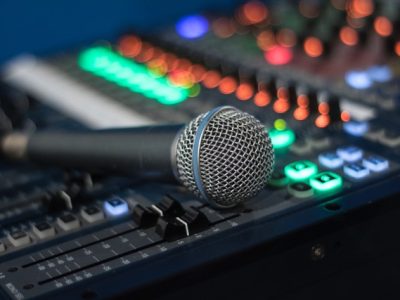
- Wired Microphones: If the speaker is going to be in one spot, then a wired mic is your best bet. The Shure SM-58 is a classic, reliable choice used by performers all over the world.
- Wireless Handheld Microphones: Useful for events with audience participation or a mobile speaker, wireless microphones are a good option. The range includes great options from both Shure and Sennheiser.
- Lavalier Microphones: If you have a speaker who needs to use their hands or will be walking, lavalier-lapel microphones offer fantastic freedom. These secure onto your clothing via a small transmitter.
And don\’t forget to factor in stands and cables when looking at microphone rentals.
PA Systems
For smaller venues without in-house sound systems, portable PA systems are essential. These systems combine a stereo amplifier, mixer, and speakers into a compact, easy-to-use package. Simply connect a microphone, plug it in, and you’re ready to go.
For larger venues, supplemental speakers may be necessary to ensure adequate coverage. Brands like Roland offer compact yet powerful systems that can fill large spaces with ease.
Soundboard and Mixer
If your venue provides a PA system, you’ll need a soundboard and mixer to control the audio and integrate it seamlessly with your audio equipment. These devices balance multiple inputs, such as microphones and music, to produce a clear, even sound output. Avid and Yamaha are trusted names in this field, offering reliable and user-friendly options.
You also want the easily overlooked but important stage monitors, so the presenter/performer can hear himself or herself. Make this part of your installation to really enhance on-stage performance.
Processors and Effects
Some events require superior sound, for which processors and effects modules can integrate with audio equipment to greatly enhance the overall sound.. It caters to compression, equalization, and other enhancements to enrich the sound in general. Effects modules let the user add some flair with reverb or even an echo—perfect for a live show or any dramatic presentation.
Brands in the top line, including Lexicon and Yamaha, carry processors and effects which upgrade the sound quality in any event.
Conclusion
Audio engineering can be an awfully complex and detailed field, but most of the basics can make quite a difference in the planning process for any event. Whether it is a large conference or a small performance, one needs the right audio equipment to get down to business. Most venues provide basic setups for anything, but for many events, this does not provide everything that is needed, and thus renting extra gear may become necessary.
From guaranteed audio rentals in Los Angeles to everything you may need-from microphones and PA systems down to every last little thing-ON-Stage Rentals, Inc. is the source you can rely on. Let their expert support allow you to provide an impeccable audio experience that will leave your attendees impressed and your event unforgettable.

 The Power of Powerful Audio Visual Tech
Leave a Reply